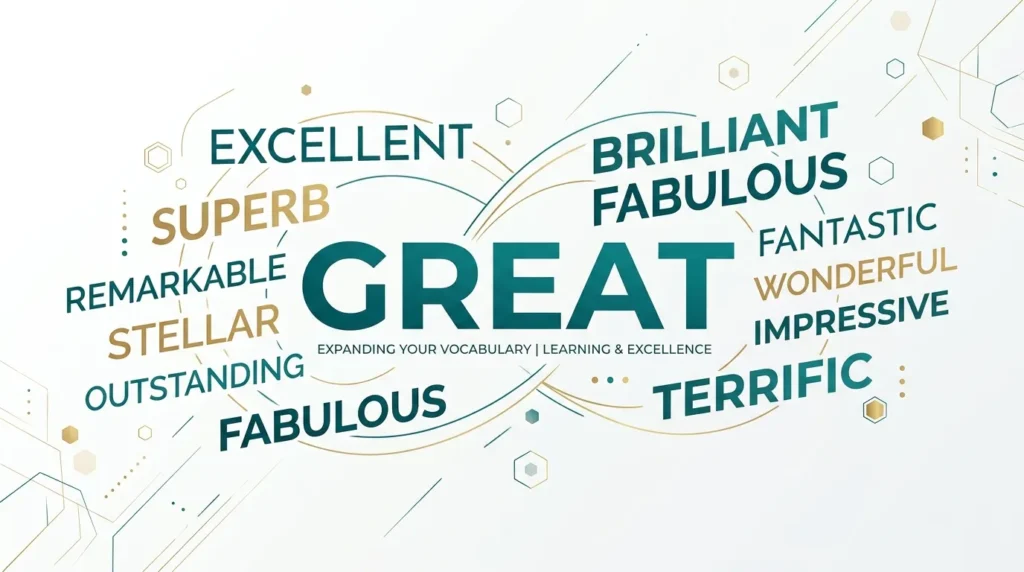
Excellent, amazing, wonderful, fantastic, outstanding, superb, remarkable, impressive, magnificent, splendid, exceptional, brilliant, terrific, awesome, marvelous, extraordinary, tremendous, phenomenal, first-rate, and superbly good are useful alternatives to great.
Picture a young athlete finishing a difficult race. His family is cheering, his coach is smiling, and someone says, “You did great!” The word feels natural because great is one of the most common words we use to show approval, praise, or excitement. But great can mean more than simply “very good.” It can describe size, importance, ability, success, enjoyment, or strong feelings.
For example, a great meal is enjoyable, a great leader is admirable, and a great achievement is important or impressive. Because the word has so many uses, choosing the right synonym can make your English more precise. Learning alternatives to great helps English learners build vocabulary and helps writers avoid repetition. This article explores its meaning, history, pronunciation, word formation, 20 useful synonyms, semantic categories, antonyms, and examples.
Meaning of Great
Definition
Great (Adjective):
Great means very good, important, impressive, successful, enjoyable, or large in degree or size.
Examples
- She did a great job on the project.
- We had a great time at the concert.
Connotative Meaning
Connotation: the feelings or ideas that a word suggests beyond its basic meaning.
- Positive tone: Great commonly expresses admiration, approval, excellence, excitement, or importance.
- Negative tone: The word can have a negative meaning when used with certain nouns, such as “great danger” or “great loss.”
- Neutral tone: It can describe something large or significant without expressing personal approval.
Etymology
The word great has ancient Germanic roots and has been part of English for many centuries.
- Old English (450 to 1100): The word appeared as grēat, meaning large, thick, coarse, or massive.
- Middle English (1100 to 1500): It developed into forms such as great and continued to describe physical size. It also gained meanings connected with importance and rank.
- Modern English (1500 to Present): Great expanded further and became widely used to describe excellence, achievement, importance, ability, enjoyment, and strong degree.
The word is related to German groß and Dutch groot, both meaning “large” or “great.”
Pronunciation (IPA)
- IPA: /ɡreɪt/
- Syllables: great
Affixation Pattern of Great
- Root: great
- Prefix: None
- Suffix: None
- Word formations:
- great: adjective
- greatness: noun
- greatly: adverb
- greater: comparative adjective
- greatest: superlative adjective
- great-hearted: adjective
- great-grandparent: noun
The words greater and greatest are comparative and superlative forms of great.
20 Synonyms of Great With Meaning & Examples
1. Excellent (Adjective)
Meaning: Extremely good and of very high quality.
Examples:
- She gave an excellent presentation.
- The restaurant provides excellent service.
2. Amazing (Adjective)
Meaning: Extremely surprising, impressive, or good.
Examples:
- We had an amazing experience.
- She has an amazing voice.
3. Wonderful (Adjective)
Meaning: Very good, enjoyable, or pleasing.
Examples:
- We had a wonderful weekend.
- That was a wonderful idea.
4. Fantastic (Adjective)
Meaning: Extremely good, exciting, or impressive.
Examples:
- They had a fantastic holiday.
- You did a fantastic job.
5. Outstanding (Adjective)
Meaning: Exceptionally good or noticeably better than others.
Examples:
- She is an outstanding student.
- The team delivered an outstanding performance.
6. Superb (Adjective)
Meaning: Extremely good or excellent.
Examples:
- The chef prepared a superb meal.
- His performance was superb.
7. Remarkable (Adjective)
Meaning: Unusually impressive, good, or noticeable.
Examples:
- She made remarkable progress.
- His memory is remarkable.
8. Impressive (Adjective)
Meaning: Causing admiration because of quality, skill, or achievement.
Examples:
- He gave an impressive speech.
- Her results were impressive.
9. Magnificent (Adjective)
Meaning: Extremely impressive because of beauty, size, or quality.
Examples:
- The palace looked magnificent.
- We enjoyed a magnificent view.
10. Splendid (Adjective)
Meaning: Excellent, attractive, or very impressive.
Examples:
- The garden looks splendid.
- They had a splendid evening.
11. Exceptional (Adjective)
Meaning: Much better than usual or different from what is normally expected.
Examples:
- She has exceptional talent.
- The hotel offers exceptional service.
12. Brilliant (Adjective)
Meaning: Extremely clever, skillful, or impressive.
Examples:
- That was a brilliant idea.
- She gave a brilliant performance.
13. Terrific (Adjective)
Meaning: Very good, enjoyable, or exciting.
Examples:
- We had a terrific time.
- He did a terrific job.
14. Awesome (Adjective)
Meaning: Extremely impressive, exciting, or enjoyable.
Examples:
- The concert was awesome.
- You did an awesome job.
15. Marvelous (Adjective)
Meaning: Extremely good, pleasant, or impressive.
Examples:
- We had a marvelous dinner.
- She did a marvelous job.
16. Extraordinary (Adjective)
Meaning: Very unusual or far better than ordinary.
Examples:
- She has extraordinary talent.
- The scientist made an extraordinary discovery.
17. Tremendous (Adjective)
Meaning: Extremely large, powerful, successful, or impressive.
Examples:
- The project was a tremendous success.
- She made tremendous progress.
18. Phenomenal (Adjective)
Meaning: Extremely impressive or unusually successful.
Examples:
- The singer achieved phenomenal success.
- His performance was phenomenal.
19. First-rate (Adjective)
Meaning: Of the highest quality.
Examples:
- The school provides first-rate education.
- We received first-rate service.
20. Stupendous (Adjective)
Meaning: Extremely impressive, large, or successful.
Examples:
- The company achieved stupendous growth.
- The view from the mountain was stupendous.
Prototype Meaning
The most typical meaning of great is something that is very good, impressive, or enjoyable. When people hear the word, they often think of strong approval or admiration. A great movie is very enjoyable, a great teacher is highly effective, and a great achievement is something impressive or important. However, great can also refer to size or degree, such as “a great amount” or “a great distance.” Its exact meaning depends strongly on the context.
Another Word for Important: 25 Strong Alternatives
Prototype Categorization
The 20 synonyms of great can be grouped into several semantic categories. Understanding these groups helps you select a word that fits your intended meaning.
- General excellence: excellent, wonderful, fantastic, superb, terrific are useful for everyday praise and approval.
- Exceptional quality: outstanding, exceptional, phenomenal, extraordinary, stupendous suggest something far above normal.
- Impressive experiences: amazing, awesome, marvelous, splendid work well for events, experiences, places, and achievements.
- Skill and ability: brilliant, remarkable, impressive can describe intelligence, talent, performance, or achievement.
- Size, success, and degree: tremendous is especially useful for describing large amounts, strong effects, or major success.
- High quality: first-rate describes something that reaches a very high standard.
This categorization helps writers avoid using the same word repeatedly and choose a synonym that expresses the exact level or type of greatness.
Antonyms of Great
Poor (Adjective)
Meaning: Low in quality, ability, or standard.
Ordinary (Adjective)
Meaning: Normal and not especially unusual or impressive.
Average (Adjective)
Meaning: Typical and close to the usual level.
Inferior (Adjective)
Meaning: Lower in quality or value than something else.
Unimpressive (Adjective)
Meaning: Not causing admiration or excitement.
Insignificant (Adjective)
Meaning: Not important, valuable, or noticeable.
Mediocre (Adjective)
Meaning: Only average in quality and not particularly impressive.
Short Questions and Answers
What does great mean?
Great can mean very good, impressive, important, successful, enjoyable, or large in size or degree.
When should great be used?
Use great when expressing strong approval or describing something impressive, important, successful, or large.
Is great positive or negative?
Great is usually positive when it means very good or impressive. However, it can be neutral or negative when it refers to size or degree, as in “great danger.”
How is it different from similar words?
Great is a broad word with many meanings. Excellent focuses on high quality, outstanding suggests being noticeably better than others, amazing emphasizes surprise, and tremendous often suggests a very large degree or effect.
Conclusion
Learning synonyms for great gives you more precise ways to express praise, importance, quality, and achievement. Instead of using great repeatedly, you can choose excellent for high quality, outstanding for exceptional performance, amazing for something surprising, or tremendous for something very large or powerful. Words such as brilliant, phenomenal, extraordinary, and stupendous can add stronger emphasis when the situation calls for it.
The best synonym depends on the meaning you want to communicate. Practice these alternatives in your own sentences and notice how native speakers use them in different contexts. Regular vocabulary practice will improve your writing, strengthen your speaking skills, reduce repetition, and help you express your ideas with greater confidence.

Hi, I’m Anaya. Words that look almost identical but mean completely different things have always fascinated me, that’s what pulled me toward writing about spelling and usage. I focus on digging into where these mix-ups actually come from, whether it’s a British-American split or just a rule English never bothered to make consistent. My goal with every guide is simple: give you the answer fast, then explain it well enough that you never have to look it up again.